
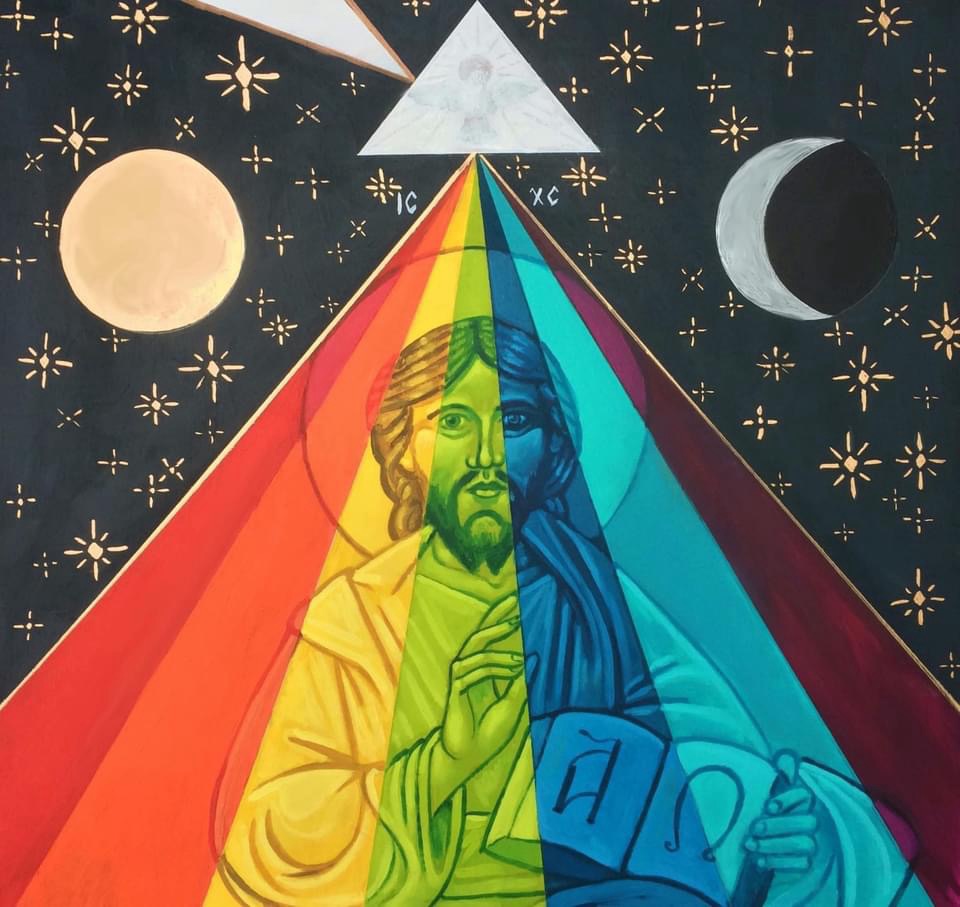
The Spiritual Condition of our Community
Our community in particular is easily molded and shaped by the values and interests of our times. We reflect the conditions and the interests of those around us. Sometimes because we just want to fit in. This makes us susceptible to the negative factors that are in conflict with spiritual values. Consumerism, over preoccupation with external appearances, lack of commitments to relationships, skepticism around religion, and seeking short term comforts over long term values.
At the same time, as a minority community or better said a community of minorities (Alphabet Soup), we have along with other minority groups suffered great persecution and continue to be so especially in underdeveloped countries in the global south. Like other communities who have suffered (Jews, Blacks, Asians, Women, Indigenous peoples, People with Disabilities) we also have a deep longing for the „spiritual“, not necessarily the „religious“…..institutional religion. One might say we have a sensitivity to the spiritual but do not embrace it necessarily.
It we go back deep into our religious roots, especially in Christianity we find a kinship rooted in our identity as sexual minorities. Just to give a few examples.
Aelred of Rievaulx Abbot and Cistercian Monk
Aelred of Rievaulx is considered one of the most lovable saints, the patron saint of friendship and also, some say, a gay saint. He foun divine love through friendships with other men.
Aelred (1109-1167) was the abbot of the large, influential Cistercian abbey of Rievaulx in northeastern England. His treatise “On Spiritual Friendship” (De Spirituali Amicita) is still one of the best theological statements on the connection between human love and spiritual love. “God is friendship… He who abides in friendship abides in God, and God in him,” he wrote, paraphrasing 1 John 4:16.
He writes…..
It is no small consolation in this life to have someone you can unite with you in an intimate affection and the embrace of a holy love, someone in whom your spirit can rest, to whom you can pour out your soul, to whose pleasant exchanges, as to soothing songs, you can fly in sorrow… with whose spiritual kisses, as with remedial salves, you may draw out all the weariness of your restless anxieties. A man who can shed tears with you in your worries, be happy with you when things go well, search out with you the answers to your problems, whom with the ties of charity you can lead into the depths of your heart; . . . where the sweetness of the Spirit flows between you, where you so join yourself and cleave to him that soul mingles with soul and two become one.
The English abbot’s own deep friendships with men are described in the classic book Christianity, Social Tolerance, and Homosexuality by Yale history professor John Boswell. “It was Saint Aelred of Rievaulx who gave love between those of the same gender its most profound and lasting expression in a Christian context…. There can be little question that Aelred was gay and that his erotic attraction to men was a dominant force in his life,” Boswell wrote. During his lifetime he was a nationally important historian who wrote the biographies of two kings (Henry II and Edward the Confessor), but his writings on human relationships seem to resonate more widely today. His feast day is Jan. 12 in Episcopal, Anglican and Catholic churches, and Feb. 3 among the Cistercians.
St Marinos Amma of the Desert Fathers and Mothers in the 4 Century.
Marinos or Marina the Monk has been called a patron saint of transgender parenting or a cross-dressing saint. Assigned female at birth, Marina adopted the name Marinos and entered a monastery as a man in fifth-century Lebanon. Marinos embraced a male identity from that point onward, even after being falsely accused of fathering a child. He adopted the boy and raised him as his own son. It was only upon Marinos’ death that his innocence became known. When Marinos did not arrive for community services, the brothers discovered his dead body his monastic cell. Upon cleaning and preparing Marinos’ body for burial, the brothers discovered that Marinos had been born female.
Marinos’ popularity is rising along with the visibility of transgender rights. This queer saint was added to the Episcopal calendar of saints in 2022 with a feast day on June 17. The saint is celebrated on June 18 in the Roman Catholic Church and on other dates in other traditions.
More reading LGBTQ Saints, Queer Saints
Q Spirit. https://qspirit.net/saints
I would like to propose that Monasticism, including the Benedictine practice of Monastic life which I profess in my own community, is deeply sensitive and adaptable to the spiritual interests and longing of our Community.
Monasticism in Early Christianity
To many observers, the modern monastery seems to be an anachronism, a kind of medieval relic. In spite of standing apart by reason of the monks’ religious devotion, their manner of dress, and other seeming oddities, monasteries remain contemporary, “tuned in” and fully aware of the world that surrounds them. Rather than a living anachronism, monastic life can be understood as a counter-culture, a way of life that deliberately departs from many of the norms of contemporary existence, its consumerism, materialism, the dominance of the virtual—and the social power of conformism. Contemplation is developed in place of these. Moreover, an examination of ancient and medieval monastic life reveals that monasteries pretty much always stood apart from the norms of daily life.
Being Different (living apart from the world…monos the root word meaning being alone)
Non Conformist (always on the edge of institutions and sometimes against them)
Gender Fluidity (wearing religious habits)
Developing the Interior Life (a deep focus on prayer and meditation)
Building non traditional Relationships….
The Cloister becomes your family. Your human Connection vs Blood Family Ties.
Shared power and decision making (RSB) The Rule of Saint Benedict
Multi Generational The Rule of Saint Benedict
Speaking from a Benedictine Perspective
My own experience.
I have practiced Benedictine Monasticism for some 15 years now and made my life profession in 2018. As a Queer man, active in our Community life both as an activist and proponent of our natural rights I have found a home in Benedictine Monasticism as it is practiced today. Benedictine monasticism is over 1500 years in practice starting around the years 525-530. As with any movement, because Monasticism is a movement within many religions and with shared values, it has taken different forms over the years. But in its essence there are certain characteristics that make it a kindred spirit to LGBTQ+ spirituality as we live our lives today.
Awareness of the Sacred and that all life is sacred, including sentinel beings, plants, animals, all living things.
Community Living
(living an alternativelife style not established by the general society, sharing all things in common like the early Christian Communities)
The Dignity of Work
(Living a balanced life between Spiritual Practices like prayer usually 5 times a day in the Monastery, for me 3 times a day in my home, and work which benefits the community usually some kind physical labor). Many Benedictine Monsteries are agrarian. Eg In Cuernavaca Our Lady of the Angels.
Hospitality.
Offering a radical welcome and safe space for those who are not members of our community to search and discover their spiritual needs and desires.
Justice and Equality
Striving for a just and peaceful society where all people are respected regardless of who they are.
Listening
Not being the center of attention or focus but deep listening that is both spiritual and emotional to the voices of our times both external and internal.
Moderation
Living simple. Rejecting individualism and consumerism. Sharing what one has in a common setting.
Loving Peace
Being Peace Makers not Peace Breakers.
Respect for all Persons
The rule tells us we must receive all persons as Christ who come to our door.
Stability
Making lifelong commitments by means of vows.
Stewardship of Material Things both Natural and Human Made
Caring for all Creation
My Personal Experience as a Monk
I live three weeks a year in a Monastery in Germany with some 60 Missionary monks from all parts of the world especially Asia and Africa. These three weeks are spent doing all of the activities alongside these Benedictine Brothers and sharing meals, silence, mutual service, prayer times, and daily activities. There are certain qualities that I have learned as I take them back with me to my own community which is dispersed (USA, UK,Spain, and Mexico).
Gentleness
(Closing Doors).
Tolerance
Letting each monk develop their natural interests and talents.
Acceptance of Difference
Understanding different roles that each monk plays in community. Eg The Brother who bakes bread. (A-sexual hard to identify gender).
Caring for each other
Table Service, Taking care of the sick, working together.
Service to the Community
A School, Opportunities for retreats and spiritual exercises, wine tasting.
Humility.
A quiet reserve, not loud or boisterous.
Music and Liturgy
A deep love for music and prayer, every day sung Liturgies, five times a day, which never changes. (Vigils and Laudes, Conventual Mass, Midday Prayer, Vesper and Compline). In that order.
In Conclusion
Monastic Spirituality is a good model for our Community in any form. It is radical. It is counter cultural. It is communal. It is peaceful and equitable. It is also practiced alongside other religious traditions outside Christianity. It is ancient and time proven, in other words, It works!
Prayer for Peace
Lead me from death to life, from falsehood to truth.
Lead me from despair to hope, from fear to trust.
Lead me from hate to love, from war to peace.
Let peace fill our heart, our world, our universe.
Pax
Pater Vincent osb
 monksmusingsdotcom
Lovely to read your Musings. I agree.Sent from my iPad
LikeLike